The first Orca One boards have come off the line. This is our earliest hardware bring-up vehicle — a custom Allwinner V3s single-board computer, designed from schematic to four-layer PCB in-house, and built to prove out our own hardware and manufacturing pipeline before anything ships to a customer.
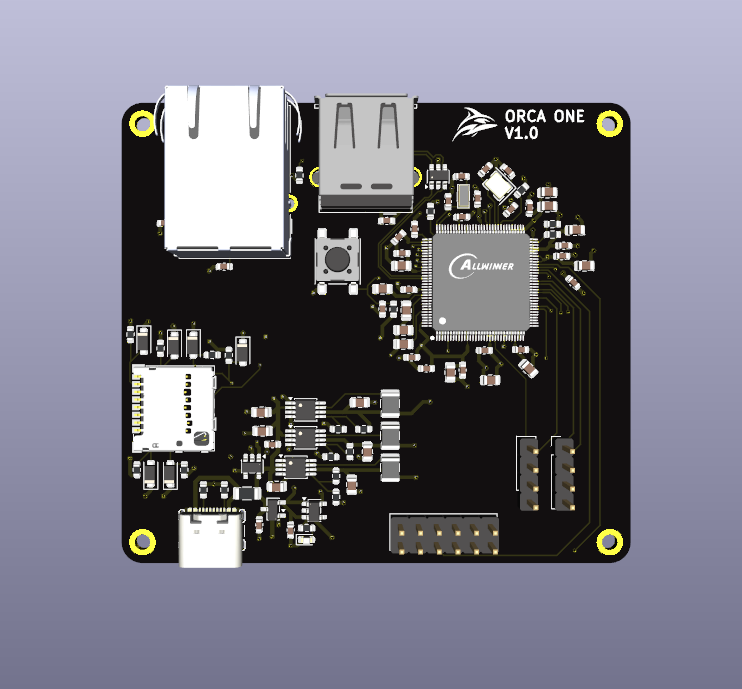
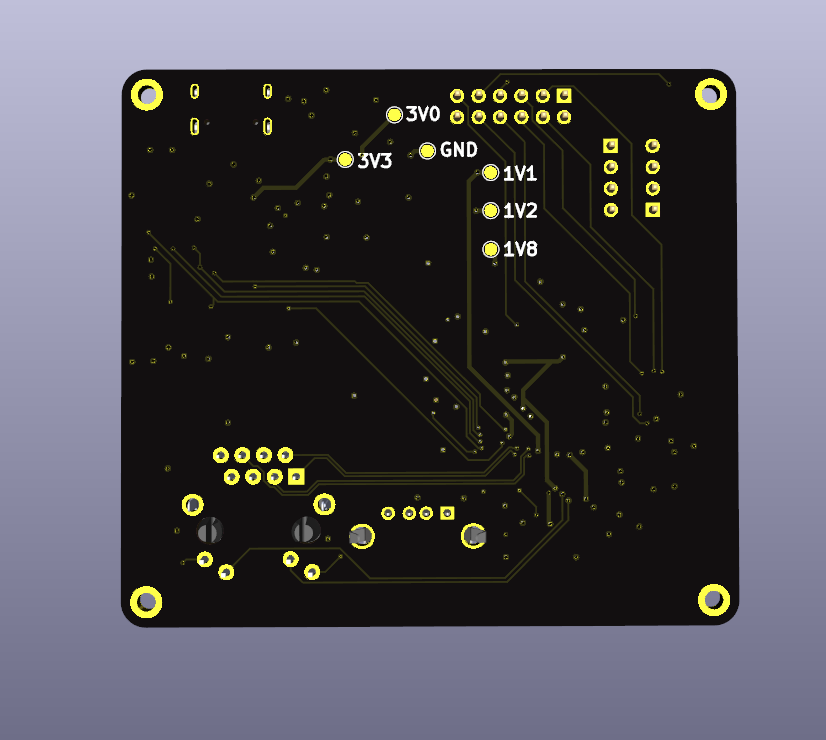
What's on the board
Orca One V1.0 is built around an Allwinner V3s processor with a custom LQFP-128 footprint, and includes:
- USB-C power input with regulated on-board power rails
- Onboard Ethernet
- USB-A 2.0 host port
- MicroSD card slot for storage and boot media
- Fan, UART, and GPIO headers for debug and expansion
- Four-layer PCB, laid out and routed entirely in KiCad
Why we built it
Before we design the hardware that ships inside a full Orca server, we needed to prove out our own process end-to-end: schematic capture, PCB layout, a real bill of materials, and an actual manufacturing run — footprints, gerbers, and placement data included. Orca One is that proof. It's a small, self-contained Linux board, not the AI-inference hardware itself, but every lesson from bringing it up feeds directly into the boards that will.
What's next
With test boards in hand, the next step is power-on and bring-up: verifying the rails, booting Linux, and validating Ethernet, USB, and storage against the schematic. We'll share what we find as we go.